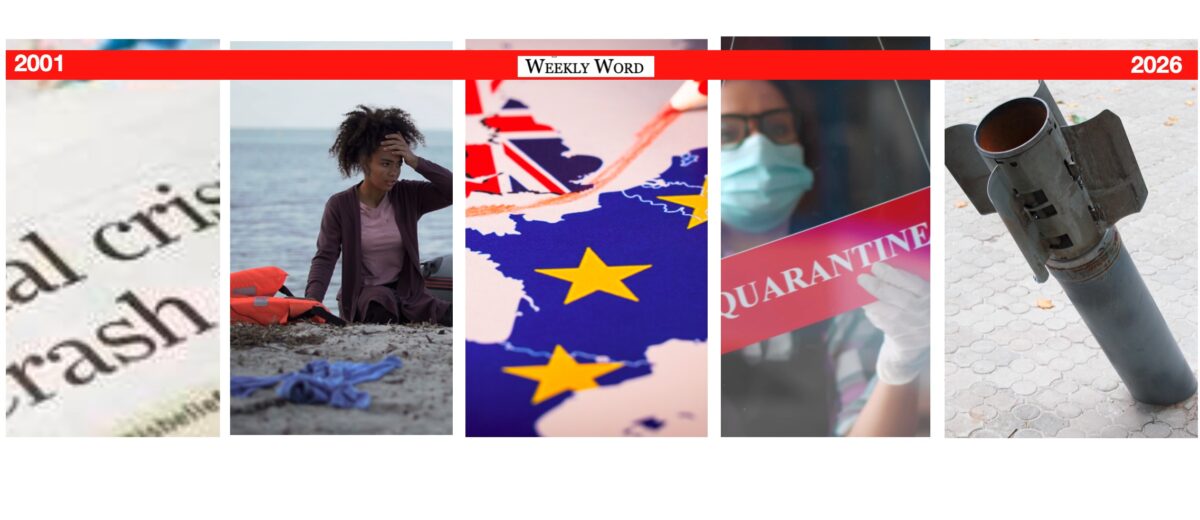
This month marks twenty-five years since the first Weekly Word was sent out in February 2001.
When this column began, Europe stood at the dawn of a new millennium confident in integration, expanding eastwards, buoyed by peace. Few foresaw financial collapse, populist revolt, pandemic and the return of large-scale war to the continent.
To write weekly across these decades has been to trace political, cultural and spiritual developments, and the deeper currents beneath them. We aim to jog memory, stir conscience and awaken imagination, drawing from the story which continues to shape Europe, albeit largely ignored.
In those early years, much reflection centred on enlargement and reconciliation. The vision articulated by Robert Schuman—that Europe would be built through concrete acts of solidarity—still shaped public imagination. When Central and Eastern European nations joined the European Union in 2004 and 2007, it felt like a healing of historical rupture. Behind the treaties stood something older than Brussels: a conviction that former enemies can become neighbours, that reconciliation was possible, and that that was how things should be.
That conviction did not originate in Strasbourg or Luxembourg. It flows from the story of Jesus—of self-giving love, of forgiveness extended to enemies, of reconciliation achieved through sacrifice. The cross and resurrection have shaped Europe’s moral grammar. Even in a secular age, Europe’s ideas of human dignity, solidarity and hope bear the imprint of that narrative.
• The financial crisis of 2008–2012 exposed fissures within the Union. Debtor and creditor nations eyed one another suspiciously. In Weekly Word we asked whether Europe was merely a monetary arrangement or a moral community. The language of grace and responsibility, of solidarity and justice, echoed faintly in debates over austerity and rescue packages. Europe’s conscience was being tested. Would the strong carry the weak? Would mutual responsibility prevail over national self-interest?
• The migration crisis of 2015 sharpened the challenge. Hundreds of thousands fleeing war – Muslims, Christians and others – arrived at Europe’s borders. Hospitality clashed with fear. National identity clashed with universal compassion. In those columns we returned repeatedly to the story of the Good Samaritan, to the stranger welcomed—or rejected. Europe’s memory includes monasteries offering sanctuary, churches sheltering the persecuted, and communities shaped by the teaching that in welcoming the stranger one encounters Christ himself. Yet that memory competes with other impulses: defensiveness, resentment, and cultural anxiety.
• The Brexit referendum of 2016 and the wider populist surge revealed deeper disillusionment. Trust in elites eroded. Supranational cooperation was questioned. Here again, Europe’s future depended not only on economic data but on moral imagination. The European project was conceived after catastrophe by leaders such as Schuman and later nurtured by figures like Jacques Delors, both of whom spoke openly of Europe’s ‘soul’. They understood that peace required more than markets; it required conversion of heart—an echo of the gospel’s insistence that transformation begins within.
• The pandemic years further stripped Europe to essentials. Borders closed. Churches fell silent. Loneliness and mortality pressed upon us. Yet across the continent acts of quiet service multiplied—health workers risking themselves, neighbours caring for neighbours. In crisis, Europe rediscovered habits of sacrificial love deeply embedded in its Christian inheritance, even when unacknowledged.
Second milestone
• Russia’s full-scale invasion of Ukraine,exactly four years ago this week shattered illusions that war between states on European soil was unthinkable. Weekly Word has since devoted sustained attention to Ukraine’s suffering and resilience. The images of destroyed cities and displaced families have confronted Europe with stark moral choices. If Europe’s identity rests on the dignity of the human person, that dignity must be defended. If Europe’s memory includes the vow ‘Never again’, it must not be an empty slogan.
The story of Jesus—crucified by empire, vindicated by resurrection—speaks powerfully into this moment. It reminds Europe that suffering is not the final word, that injustice does not have ultimate authority, that hope can endure even under bombardment. It also calls Europe to costly solidarity, to stand with the violated and resist the logic of domination.
Across twenty-five years, several themes have woven through these columns: memory, faith in public life, youth formation, justice and hope. Underlying them all has been a conviction that Europe’s existence is not accidental. Its cathedrals and universities, its legal traditions and social movements, its language of rights and responsibilities, have been profoundly shaped by the gospel story.
The deeper question we can all help answer is: will Europe remember the story that formed it? Not as a tool of exclusion, nor as nostalgic conservatism, but as the living source of reconciliation, renewal and hope.
I long to write about a third milestone when truth, dignity, love and peace prevail in Ukraine and beyond.
May Your Kingdom come! In Ukraine. In Russia. In Europe.
Till next week,