One of several unsettling aspects of the Easter story for me has always been how the same people who had welcomed Jesus into the city with ‘Hosannas’ could call for his crucifixion just days later.
These were religious people. They knew Scripture. They were waiting for the Messiah. They were egged on by religious leaders who also knew the Torah.
So why would they choose someone who had been involved in a violent insurrection over someone preaching a message of love, forgiveness and truth?
(After all, who would ever vote for anyone who instigated a violent insurrection?)
This is not merely a historical detail. It is a mirror. It is not just about them—it exposes something very current about human psychology, politics and religion.
The question of Easter is not only ‘what did they do?’ It is also ‘what would we do?’ Perhaps, ‘what are we doing?’
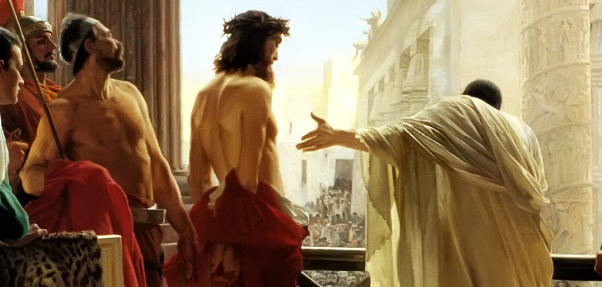
In the courtyard of Pontius Pilate, two figures stood before the crowd. One, a man known for violent rage, a murderer, seething resentment and seeking vengeance – Barabbas. The other, a man of mercy, a healer, a wise teacher of love and reconciliation – Jesus.
Pilate offered the crowd a choice: one would be released. A no-brainer, thought Pilate.
Yet the crowd shouted: “Barabbas!”
Which should astonish us. But we were not in the crowd, swept along by the hysteria of the moment. Perhaps we have never experienced mob behaviour, the dynamics of crowd psychology, and the resulting volatility. For the ‘crowd’ is not a stable moral agent. It is easily influenced, emotionally reactive and susceptible to suggestion.
The Gospels tell us where suggestion came from: the persuasive voices of religious leaders. The same crowd that celebrated the Son of David can be mobilised differently under pressure, flipping collective emotion rapidly.
And so Jesus was led to the cross.
The Appeal of Barabbas
Actually, Barabbas represented something deeply attractive. The people were living under Roman occupation. They longed for liberation. They wanted someone who would fight. Someone strong, defiant, promising action. Barabbas looked like someone who would fight for Jewish liberation.
Jesus, on the other hand, looked weak. He refused violence. He spoke of loving enemies. He appeared submitted rather than resistant. To many, Jesus appeared passive — even disappointing.
Unfulfilled expectations can produce strong reactions. As with Judas. And so the people chose Barabbas.
Here the story becomes uncomfortable. Because the same dynamic still exists today.
When societies feel anxious, threatened or humiliated, charismatic strong figures become attractive. Leaders who promise strength, restoration, victory and greatness.
All over Europe, and across the Atlantic, leaders are attracting voters by projecting certainty, speaking boldly, promising quick solutions and dividing the world into friends and enemies.
That’s how Hitler won over decent, ordinary Germans, promising restoration of Germany’s greatness. It’s how Putin rose to power, promising restoration of Russia’s greatness. Both were supported by religious leaders.
Again and again, human societies gravitate toward Barabbas.
The Temptation of Charismatic Narcissism
We don’t know enough about Barabbas to know if he was narcissistic.
But we can identify past and present leaders in this category, both political and religious, who spoke/speak with certainty, promised/promise greatness, demanded/demand loyalty and divided/divide people into allies and enemies. Narcissists often attack critics aggressively. Critics become cautious, and supporters rally more strongly. The narcissist becomes victim, hero and fighter all at once.
Like the religious people in the Jerusalem crowd, Christians too can be wooed into choosing Barabbas. The sense that Christianity is losing influence, society is becoming more secular and moral values are eroding creates a fear that can lead to support for strong leaders, aggressive rhetoric and simplistic solutions. Fear narrows moral discernment. Tempted by access to power, Christians can look for a protector rather than a servant leader.
As justification, some religious leaders appeal to Cyrus the Great, the pagan ruler in the Bible whom God used to free Israel. “God can use imperfect leaders.” “We don’t need a saint — just someone effective.”
Once support begins, it becomes hard to withdraw. After people commit to a leader, they defend them more strongly. They ignore negative evidence. They blame others for failures.
This is called cognitive dissonance: people prefer to defend their past decisions rather than admit they were wrong.
There’s also a deeper human dynamic. Narcissists often mirror something in society itself: the desire for greatness, the fear of weakness, the longing for identity, and resentment toward elites or outsiders. In this sense, narcissistic leaders don’t just create movements — they reveal them.
The Surprise of Easter
The resurrection vindicates the humble path of Jesus. God’s power is revealed not in domination, but in sacrificial love. Not in coercion, but in transformation. Not in pride, but in humility.
The resurrection declares the way of Jesus, rejected by the crowd, as the way of life.
Till next week,