The name ‘Ukraine’ has often been translated as ‘borderland’ – for many of us Ukraine is still ‘way over there’ on Europe’s geographical frontier – yet much of Ukrainian history tells the opposite story.
My trip to Kyiv last week has sharpened my understanding of how increasingly central Ukraine is to Europe’s future. Kyiv has stood at the heart of several of Europe’s deepest and still unresolved questions: East and West, freedom and empire, national sovereignty and interdependence, faith and secularism, memory and reconciliation.
Two weeks after Russia brutally invaded Ukraine in 2022, I wrote a weekly word about why Ukraine mattered. I quoted Andrej Zubov, a Russian professor who understood that what happened in Ukraine mattered for the rest of both Europe and Eurasia. Politicians aiming to build a real democratic state in Ukraine represented a clear and present danger to the Moscow regime, he explained. If they succeeded, Putin’s plans to rebuild the Russian empire would be greatly threatened.
Zubov was successor to Alexander Solzhenitsyn as the editor-in-chief of the book The History of Russia in the 20th Century. After criticising Russia’s annexation of the Crimea in 2014, he was sacked from his post at the State Institute of International Relations. I met him soon after in Prague, and invited him to address our State of Europe Forum in Riga in 2015.
Here’s what I wrote then: Contrary to Putin’s claims that Ukraine was not a proper nation or a truly separate people, Zubov explained how Ukraine has been different from Russia for centuries, being more European and more cultured.
Since the Maidan Revolution of Freedom and Dignity (2014-5), Zubov wrote, Ukrainians began to think for themselves and accept responsibility for their own future, not simply accepting tired Soviet-style clichés. Homo maidanus was learning to stand up and walk on his own two feet. Together with their fellow countrymen, Ukrainians began to work towards a responsible society.
Since then my understanding of why Ukraine matters for both Europe and Eurasia has deepened further. While many in Europe have finally realised that Ukraine is on the frontline of the battle for Europe’s freedom and democracy, there are even more dimensions to Ukraine’s role in Europe’s future.
1. A spiritual fault-line
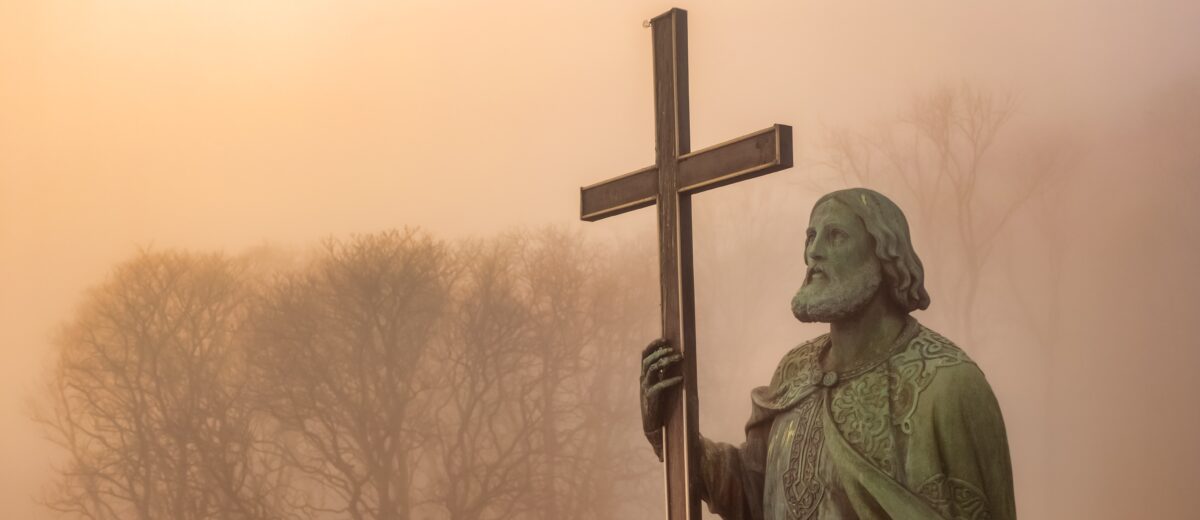
Ukraine stands at the heart of the story of the great rift between east and west, where Byzantine and Latin Christianity meet. Kyiv, not Moscow, was where Byzantine Christianity was introduced from Constantinople by Volodymir the Great in 988. Shortly after in 1054, the Great Schism occurred between Rome and Constantinople. The occasion was a theological dispute concerning the Holy Spirit – but at stake were questions of politics and power. Over the centuries, this theological issue contributed to a deep spiritual fault line between East and West. Mistrust, misunderstanding and outright enmity – ecclesiastically, politically, militarily and culturally – has shaped the east-west relationship up to the present conflict.
Ukraine, not Russia, straddles that fault line. Its history encompasses Orthodoxy, Roman Catholicism, the Byzantine tradition of the Ukrainian Greek Catholic Church, Protestant influences and a rich Jewish heritage. Parts of Ukraine belonged to the Polish-Lithuanian Commonwealth, others to the Austrian Habsburg monarchy, others still under the Ottoman Empire. Ukraine therefore does not simply sit between East and West. It carries both within its history.
While the Reformation – that other great rift of church history between the Roman Catholic Church and Protestantism – was bridged with the landmark Joint Declaration of the Doctrine of Justification of 1999, the Great Schism has not been adequately healed. Pope John Paul II said Europe and the Church must learn to breathe with two lungs, representing the Western (Roman Catholic) and Eastern (Orthodox) traditions. He longed for the healing of the historical and theological divisions between Western and Eastern Christianity.
Here’s where the Ukrainian Greek Catholic Church is particularly significant. An Eastern Church in full communion with Rome, it embodies within its own life the possibility that Eastern Christian identity and communion with the West need not be mutually exclusive. I have written elsewhere about the contribution this church has to make to the rebuilding of Ukraine. Unlike Russia, Ukraine has learned with live with diversity.
2. A significant precedent
Last year as I focused on the story of Amsterdam over nine centuries, I began to see a remarkable parallel with Ukraine’s story. For no-one set out to create the Dutch Republic in the sixteenth century. It was the accidental product of resistance to Spanish tyranny. Encouraged by Calvin’s teaching about the Christian duty to resist tyranny, the Dutch provinces pushed back on Habsburg repression. William of Orange was their ‘Zelensky-figure’ who galvanised opposition against ruthless massacres.
Resistance, religious conviction, political experimentation, commerce and civic initiative eventually produced an extraordinary society. Long before peace was officially achieved in 1648 (after eighty years!), the Dutch Republic had become a laboratory of European modernity. Amsterdam – not London or Paris – became the world’s leading city, a centre of finance, shipping, cartography, publishing, urban development, science and philosophy. I call it ‘the womb of the modern world’. The fledgling republic’s federal structure and Declaration of Independence (the Plakkaat van Verlatinghe of 1581) heavily influenced later republican experiments, including the American Revolution.
The unexpected resistance and resilience from this swampy province with no natural resources illustrates how violent repression can produce unforeseen responses and long term consequences. The Dutch Republic’s success marked the beginning of the end of the Spanish empire. As Zubov understood, Ukraine’s success is unravelling Putin’s plans for his Russian empire.
3. World leadership
While early last year two politicians acting like playground bullies told Zelensky he had no cards, the world has since watched his country emerge as a world leader in several areas.
Ukraine is now recognised as the most formidable fighting force in Europe and a global drone superpower. Whereas NATO experts would train and advise Ukrainians, Ukrainians now train and advise NATO troops. So much for Putin’s plans to ‘demilitarise’ Ukraine! European leaders now recognise Ukraine not as an obstacle to international stability but as indispensable for Europe’s future security.
The World Bank has recognised Ukraine as a global leader in public sector digital transformation. In banking, Ukraine is widely regarded as more digitally advanced than many of its EU peers. It is the first country in the world to introduce official digital passports with complete legal equivalency to physical paper or plastic documents. It has the world’s first national AI assistant capable of executing multi-step public transactions rather than just answering standard questions. The government has radically simplified the process of launching and operating businesses, enabling entrepreneurs to register a sole proprietorship online in about ten minutes, entirely without human intervention.
Within days of the invasion, digital services were launched to process financial aid for internally displaced persons (IDPs), allow immediate damage reporting of property for compensation and secure state e-mortgages. Recognising the strain on couples separated by conflict, Ukraine introduced fully remote, legally binding digital marriage registrations directly inside an app.
No cards?
4. Unfinished business
Ukraine’s battle for freedom and democracy represents the third phase of the liberation of post-war Europe. The first phase begins with the story of Robert Schuman and the start of European integration. Europe’s first great post-war transformation was made possible through forgiveness and reconciliation. We have called it a ‘moment of grace’. Schuman understood that reconciliation had to become institutionalised. Former enemies needed to enter a new relationship of interdependence.
A second ‘moment of grace’ came in 1989–91, when the peoples of Central and Eastern Europe broke free from communism. I have told the story of the spiritual revolution behind the fall of communism in a series of weekly words. It is an unfinished story, interrupted by factors from both east and west. It begged a sequel.
The Maidan revolutions in Kyiv began this sequel, still unfolding and being closely watched by other post-Soviet Union republics. The outcome of this present conflict will greatly shape their own futures. When Zelensky stood his ground in Kyiv in February 2022 refusing to flee and Russia’s attempt to capture Kyiv failed, the world witnessed a third moment of grace that has now stretched to over four and a half years.
5. A ‘soul’ laboratory
There is yet a further dimension. Europe itself is struggling with questions of identity and purpose. It has remarkably successful institutions, but increasingly asks what values can sustain them. Schuman insisted Europe needed a soul. Economics and technology was not sufficient. He envisioned Europe as a community of peoples deeply rooted in basic Christian values.
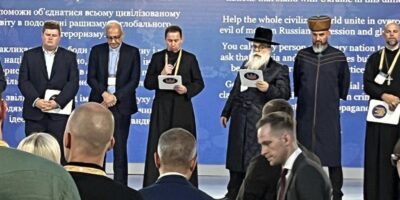
I have met a number of Ukrainian politicians, activists and church leaders envisioning their own nation as deeply rooted in spiritual values. On the 500th anniversary of the Reformation in 2017, I was invited to talk with a Ukrainian delegation from church and politics in Strasbourg on the impact of the Reformation on Europe. Despite their own diversity of religious and political views, they were searching for the way forward for their nation. I found myself involved in further consultations on this theme in Kyiv, Warsaw, Rzeszów and Lviv.
I know of no other country with such a degree of unity and mutual respect across the Christian spectrum – forged in the furnace of Maidan. A strong awareness of the importance of public theology and of practical co-operation in responding to their nation’s suffering is shared by most churches.
A major personal discovery for me last year was that of the great Ukrainian Greek Catholic leader of the early twentieth century, Metropolitan Andrey Sheptytskyi. He understood that rebuilding a nation required more than political independence. He taught and wrote about the person, family, economy, education, social responsibility, justice and the role of the Church in society. His legacy raises the question: What if Ukraine’s reconstruction is not simply about rebuilding its infrastructure, but about transformation, about rebuilding its heart and recovering its soul?
Ukraine’s significance for Europe could be as a laboratory for the recovery of Europe’s soul: showing what freedom is for, what reconciliation requires, what kind of society it wants to become, what values it wants to live by.
Not a mere borderland. A heartland.
Till next week,