A dinner discussion last weekend with an old associate reminded me how I first became aware of him when he and three other young people were imprisoned in Morocco.
The year was 1982. We had sent out summer teams on evangelistic outreaches from the Heidebeek training community where I was leader, to various locations in Europe and North Africa. Paul, a 23-year old schoolteacher, had ridden his bike from the Netherlands to join a team in southern Spain to cross over to Morocco. Their plan was to combine a camping holiday with friendship evangelism among locals. Paul and his team mates befriended some locals in their campground in Fez, some of whom showed real interest in the Bible. One evening Paul offered a young man a copy of the Gospel of John.
Early the next morning the team awoke to discover the whole campground surrounded by police, who moved in to arrest the team. Paul and teammate Peter were herded into a cell with criminals crouched around the walls. The two women, Anneke and Joke, also found themselves in a dormitory cell shared with other female inmates.
After two weeks, a Moroccan court sentenced Paul to two years’ imprisonment for distributing Christian literature without authorisation. His tall stature led them to assume (incorrectly) that he was the team leader. The others were released. While Morocco allowed freedom of worship for existing Christians, ‘proselytising’ Muslims was (and remains) highly restricted.
I remember the sleepless nights I had as the Heidebeek leader at the time, firstly thinking about the four in the crowded prison, and then for Paul facing two years in those cramped conditions. After Paul’s parents came to see my wife and me at Heidebeek, his father travelled to Morocco and visited him in prison.
The Dutch Embassy provided legal representation, regular consular visits and food parcels. A letter writing campaign was organised appealing to the Dutch government, the embassy and even Queen Beatrix. Her intervention eventually led to Paul’s release after five weeks in prison.
Paul’s imprisonment became a precursor to later YWAM hostage stories. The very next year, for example, several members of a Heidebeek discipleship school on outreach in Lebanon were held hostage at gun-point along with a Swiss doctor, Josianne André. Some local militia probably had tried a ‘fund-raising’ venture as was common there in the mid-eighties, releasing the hostages after three anxious days for family and for us as mission leaders.
One day at a time
In 1998, when I was serving as European director, I received an urgent phone call from our YWAM leader in Rostov-on-Don in Russia. A newly married Swedish couple, both 22 years old, had been walking home from church in Makhachkala, Dagestan, when masked men forced them into a vehicle and drove them into neighbouring Chechnya. Daniel and Paulina Brolin had become the latest hostages in the region’s lucrative kidnapping industry. When I arrived in Stockholm with an international lawyer to talk with family, church leaders and government contacts, their names were in the headlines.
Their book 165 dagar: Ett kidnappningsdrama (‘165 Days: A Kidnapping Drama’ – only in Swedish) tells a gripping hostage narrative and a testimony of Christian faith under extreme pressure. Daniel and Paulina describe the monotony and terror of living for over five and a half months in a dark, mouldy underground cellar. They had almost no daylight, poor sanitation, little food, and constant uncertainty about whether they would be killed. Near the end of their captivity Daniel endured repeated beatings. Yet the psychological struggle—the uncertainty—proved even harder than the physical deprivation.
Scripture, prayer, hymns, and memorised Bible verses became their daily nourishment. They learned to survive one day at a time. The Brolins reflect in their book on forgiveness, trusting God’s justice, and refusing to allow their kidnappers to determine the rest of their lives. In later interviews they have said the experience taught them to treasure every ordinary day and to use their lives more intentionally in God’s service. Daniel and Paulina eventually returned to overseas service—this time in Thailand—with their four children. Daniel explained that although the kidnapping inevitably influenced their decisions, they did not want fear to determine the course of their lives.
Suffering stripped away everything
Last month I met Els, the Dutch wife of Jeff Woodke, an American aid worker with YWAM who had devoted more than 25 years to serving some of the poorest communities in Niger., developing schools, water projects and agricultural initiatives.
Then on 14 October 2016, he was abducted by armed jihadists in Abalak, Niger. He was taken across the border into Mali, where he spent six and a half years in captivity under al-Qaeda-linked extremists. During those years he was repeatedly beaten, chained for long periods, deprived of adequate food and medical care, and pressured to renounce his Christian faith and convert to Islam. Yet he clung to hope through prayer, Scripture and the conviction that God had not abandoned him.
After a multinational effort involving the governments of the United States, Niger and France, Woodke was unexpectedly released in March 2023 alongside French journalist. Reunited with his wife, Els and his family, he began the long process of physical, emotional and spiritual recovery.
His forthcoming memoir, All the Way Home is much more than a hostage narrative. It explores how suffering stripped away everything except the essentials of faith, hope and love. Woodke writes candidly about trauma and PTSD, but also about forgiveness, freedom and the resilience of the human spirit. Rather than being a story defined by hatred or revenge, All the Way Home is ultimately a testimony to the sustaining power of God’s faithfulness and the possibility of returning home—not only physically, but spiritually.
The new normal?
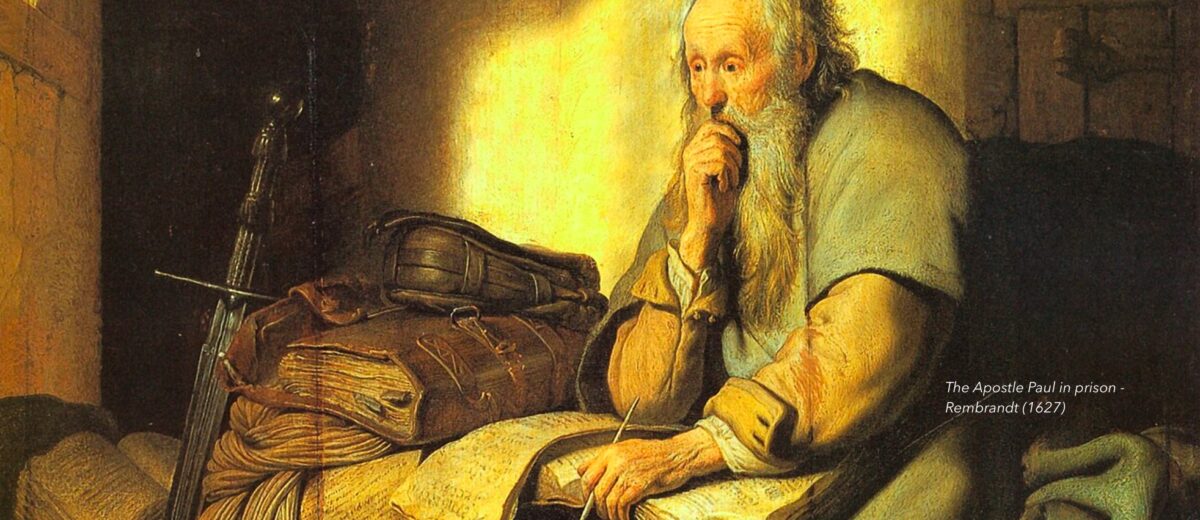
For us in the west, such stories are extraordinary and not part of normal church life. But kidnappings and imprisonments are a recurring theme both in the biblical narrative and in church history. Joseph’s imprisoned in Egypt led to the preservation of nations. Jeremiah was imprisoned for speaking truth. Daniel was taken captive to Babylon, and influenced an empire. Paul wrote some of his greatest letters from prison.
Patrick was trafficked as a 16-year old to Ireland where he later returned as as missionary apostle. Jan Hus, Thomas Cranmer, William Tyndale and John Bunyan are among the many who suffered imprisonment and death for the gospel’s sake. As are Dietrich Bonhoeffer, Corrie ten Boom and Richard Wurmbrand last century.
Yet for millions of believers today, arrest, imprisonment, kidnapping, torture, or even martyrdom is an ongoing part of ordinary discipleship. Open Doors reports that some 388 million Christians—about one in seven Christians worldwide—live under high, very high, or extreme levels of persecution and discrimination because of their faith.
Seven in ten Christians killed worldwide were Nigerians, the epicentre of lethal anti-Christian violence by Islamist extremist groups. India has the largest number of Christian detentions, often through the use of anti-conversion laws; thousands of believers have been arrested or imprisoned following accusations of unlawful evangelism. In countries such as North Korea, Eritrea, Iran, China, and parts of Central Asia, Christians may spend years in prison. In parts of sub-Saharan Africa, however, the greater danger is often kidnapping or murder rather than formal imprisonment.
Increasingly, the ‘normal’ Christian experience is no longer that of the comfortable Western church but of believers who worship under pressure. For many of the world’s Christians today, the question is not whether suffering is part of discipleship, but how to remain faithful within it.
The exhortation of Hebrews 13:3 is as relevant today as when penned: “Remember those in prison as if you were together with them in prison.”
Till next week,