Memory is one of those things that we take for granted – until we begin to lose it.
When we stop to think about it, memory is an absolutely amazing capacity that we are all born with even before we have anything to remember. It allows us to carry something of our past into the present, learn from experience, recognise people, develop relationships, and imagine the future.
None of us did anything to get this faculty. It is part of the wonder of how God has created each one of us. And we are exhorted to remember our Creator (Eccl. 12:1) and not be tempted to think we are self-made beings. Deuteronomy 8:17-18 warns us against thinking that our own efforts have earned us our prosperity. Remembering our Creator and pondering the wonder of memory itself will keep us humble and grateful.
Memory is not simply a filing cabinet in the brain, where experiences are stored like documents and retrieved unchanged when needed. It is a much more dynamic process. Every time we remember something, our brain is in some sense reconstructing it. We are told there are three stages of memory:
1. Encoding – taking things in: Our senses receive information from the world. The brain selects some of it for attention and begins converting it into patterns of neural activity. Emotion, concentration and personal significance influence what we encode.
2. Storage – retaining information: The brain changes connections between neurons. These changes, particularly through a process called synaptic plasticity, help preserve information. Memories are distributed across networks rather than stored in one particular location.
3. Retrieval – bringing it back: Something triggers a memory: a smell, a photograph, a familiar melody, a place or a conversation. The brain reconstructs the experience from information distributed across its networks.
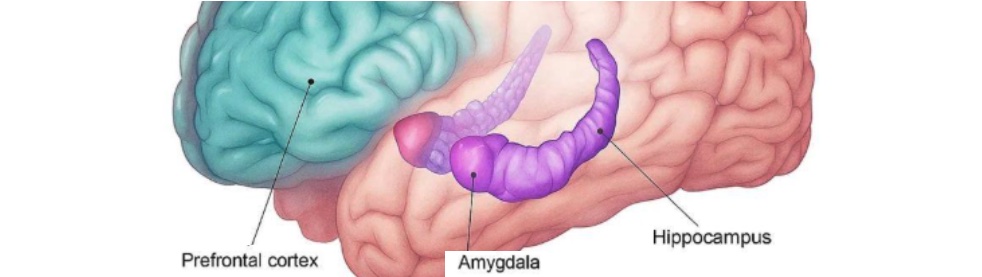
Neuroscientists tell us there is no single memory centre. Several brain structures play important roles. The hippocampus is essential for forming and organising new memories, particularly memories of events and experiences. The amygdala helps process emotional significance, influencing how strongly emotional experiences are remembered. Our cerebral cortex contains distributed networks involved in storing and retrieving much of our long-term knowledge and experience. And the prefrontal cortexhelps organise, interpret and retrieve information, especially when we consciously try to remember something.
I have no clue how that all works. I’ve never really thought about it. I’ve just taken it for granted. It is a pure gift from God. It’s truly a wonder!
Spiritual discipline
One fascinating feature is that sleep helps consolidate memories. During sleep, the brain reactivates and reorganises patterns of activity from the day, helping some memories become more stable. For myself the liminal period of waking hours is often the most inspirational phase of the day, after my body has been sleeping.
How is it that a sound, a smell, a name mentioned, a photo, can take us back years, even decades, to relive some past experience? Perhaps a happy one, or maybe a painful one.
What a gift God has given us in the ability to remember! An experience can be over in minutes and still shape us decades later. We can draw courage from a kindness someone showed us when we were young. We can learn from a mistake whose consequences we would prefer to forget. And we can pass on something of what we have lived to people who could never have witnessed it themselves.
Scripture so often speaks of remembering as something we are called to do. Remembering is one of the Bible’s most important spiritual disciplines. The theme is especially strong in Deuteronomy: Israel is repeatedly warned not to forget what God has done; in Psalms: remembering God’s faithfulness is a foundation of worship and hope; in Isaiah: God remembers his covenant and promises; in Nehemiah: remembering God’s promises encourages people rebuilding Jerusalem; in The Gospels: Jesus calls his disciples to remember him at the Lord’s Table; in Hebrews: believers are encouraged to remember earlier examples of faithfulness and perseverance.
Three dimensions
Memory is foundational for three dimensions of biblical remembrance. We remember what God has done so that we may become the people God calls us to be.
Firstly, remembrance preserves our identity. We cannot know who we are if we forget where we have come from. ‘Remember that you yourselves were slaves in Egypt.’ — Deuteronomy 5:15. This is one of the most socially and politically meaningful commands in the Bible. Israel had to remember her past oppression to prevent her from oppressing others(!). This memory was foundational for justice, compassion and care for the vulnerable. Our liberation should stir us to champion the freedom and dignity of others
Next, remembrance awakens our conscience. We cannot live responsibly without remembering the suffering, mistakes and sacrifices of others. ‘Remember those in prison as if you were together with them in prison.’ — Hebrews 13:3
Lastly, remembrance nourishes our imagination. We cannot imagine a better future without remembering God’s faithfulness. ‘Yet this I call to mind and therefore I have hope.’ — Lamentations 3:21
Till next week,