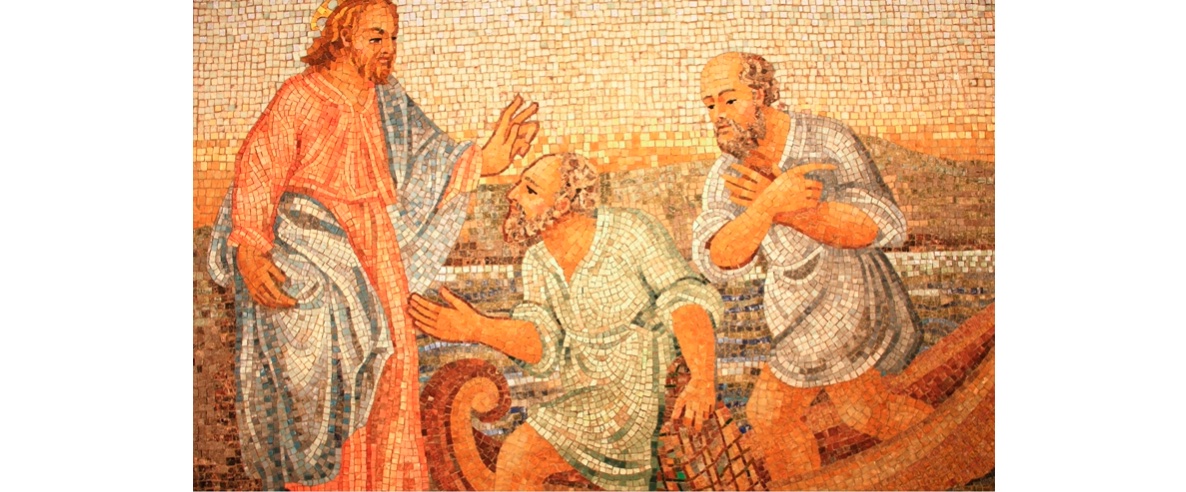
Ascension Day commemorated this week marked a profound turning point in human history.
Yet few recognise its significance. For most it’s just a forgotten yet convenient religious spring holiday.
The forty days prelude to the ascension after Jesus’ resurrection left the disciples in a strange and uncertain limbo. Jesus had risen from the dead. The impossible had happened. Everything had changed. Fear had given way to astonishment and hope. Yet nothing seemed settled. What now? wondered the disciples.
They knew Jesus was alive, but they did not yet understand what the resurrection meant for them — or for the world.
For three years they had followed Jesus through the towns and villages of Galilee and Judea. The trauma of the cross had collapsed their dreams into confusion, disappointment and fear. Even after the resurrection appearances, they were not instantly transformed into confident leaders of a world movement. Jesus had always been there to lead them. Now they were uncertain, hesitant and disoriented.
Impulsively, Peter decided to return to doing what he knew best: fishing. Others joined him, drifting back toward their old identities and routines. Like we all do in moments of uncertainty – return to what feels secure. Yet it was fruitless, empty, unsuccessful… until Jesus turned up on the beach.
Then came Ascension Day. Luke tells us in Acts 1 that in this, their last meeting with Jesus, they asked him: Are you now going to restore the kingdom to Israel? Are you now going to make Israel great again?
Sound familiar? Despite all they had seen and heard, they still thought in national and political categories. They longed for Israel’s restoration after centuries of occupation, humiliation and foreign domination. Somehow they expected the Messiah to restore national glory and divine favour to Israel.
Expanded horizons
This is where the turning point came. Jesus radically redirected their vision, expanding their horizons beyond anything they had imagined. God’s purposes were for all nations, not just for one.
They, not he, were to be the ones to turn the world the upside down, or right way up – ‘in Jerusalem and Judea, Samaria…’
Samaria?!… the disciples must have thought. Who wants to go there? Jews viewed Samaritans with suspicion and hostility. Yet Jesus deliberately included outsiders and historical enemies within the scope of God’s kingdom. The gospel would not be tribal, nationalistic or exclusive. It would cross borders, cultures and ethnic divisions.
‘…And to the ends of the earth!’
The ends of the earth?! What went through their minds when he said these words? None of them had ever gone beyond Palestine and Samaria. They would have been aware of Europe, Africa and Asia. Not of course the Americas.
This was the moment the revolutionary world missionary movement started, God’s only plan for transformation – using weak, human vessels like us. The disciples standing there looking up into the clouds could scarcely have imagined where this mission would lead – once the Spirit had come upon them.
Peter would eventually go to Rome; Andrew to Greece and the Black Sea, some say even to parts of modern Ukraine and Romania. Thomas founded the church in India. Other apostles are associated with Armenia, Persia, Ethiopia, Syria, Georgia and Mesopotamia. A small movement on the eastern edge of the Roman Empire would spread across the Mediterranean world, into the heart of Europe itself and eventually, indeed, to the ends of the earth.
Spiritual roots
The vision of human dignity, forgiveness, reconciliation, justice and the equal value of every person before God carried by these messengers and their successors profoundly shaped European civilisation over centuries. Today Europe’s universities, hospitals, movements for human rights, democracy, care for the poor and concepts of reconciliation all carry traces of this gospel vision — even if modern Europe often forgets its roots.
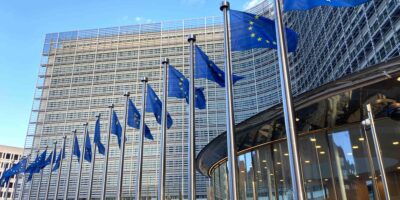
This week in Brussels we gathered as the Together for Europe movement in the European Parliament with 120 Christian young people from across Europe, including YWAM schools from Amsterdam and Stockholm – Pentecostals, Evangelicals, Protestants, Catholics and Orthodox. We reminded ourselves of the spiritual roots of Europe and of the European project, and of the continuing spiritual and relational calling to promote peace and reconciliation.
In a fragmented and anxious continent, many young Europeans again find themselves in a kind of limbo — uncertain about identity, future and purpose. Many are tempted to retreat into fear, nationalism, cynicism or nostalgia, just as the disciples returned to fishing.
The Ascension Day commission still speaks to us today. Withdrawal into tribalism or national self-protection is no option. Jesus sends us across borders and histories of hostility as witnesses of reconciliation and hope. The kingdom of God is far larger than the restoration of one nation’s glory. It is the invitation of all peoples into a new humanity – shared by weak, human vessels like us.
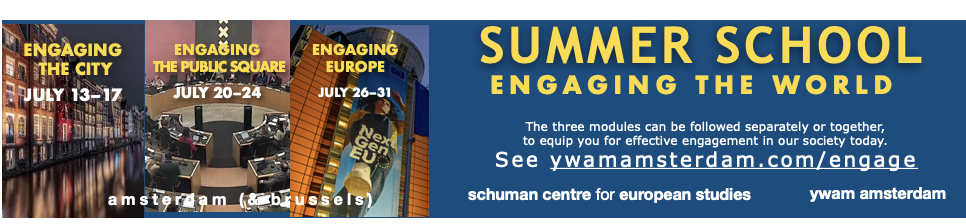
P.S. Want to explore this further? Come join us in Amsterdam and Brussels for the ‘Engaging Europe’ module of the summer school, Engaging the world, July 27-31. [See ywamamsterdam.com/engage]
Till next week,


r6civk